DMA means devices can access physical memory independently of the CPU
DMA is rather a concept than a specific technology. There is no specification which describes in detail how DMA transfers work.
Uses
Typical application is communicating with peripheral devices plugged into a bus system like ATA, SATA, PCI or PCI Express. (the one we care about atm)
intra-core communication in micro processors
Copy data from the memory of one computer into the memory of another computer over the network via remote DMA
Implementation
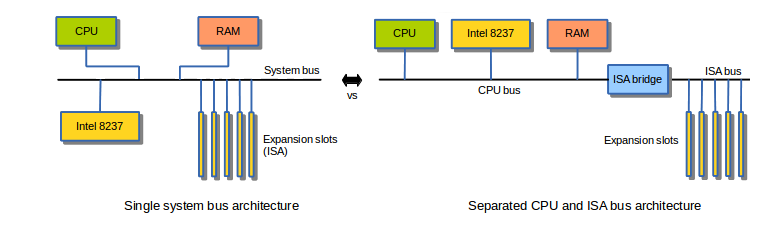
Third party DMA using ISA
Bus topology
These used DMA controller
The DMA controller could be programmed by the CPU to perform a number of memory transfers on behalf of the CPU. This way of accomplishing DMA transfers is also known as third party DMA.
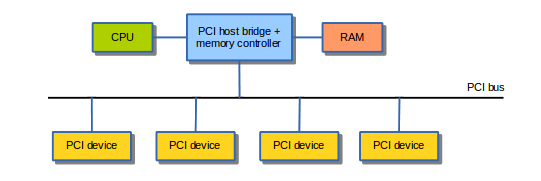
PCI DMA
Introduced bus mustering. No more DMA controllers.
i.e only one device at a time to access the bus.
The CPU, the DMA controller and bus masters could all be competing for memory access. The memory arbiter typically favors the CPU
Compared to DMA controller, with bus mustering devices must contain a DMA engine driving the memory transfers.
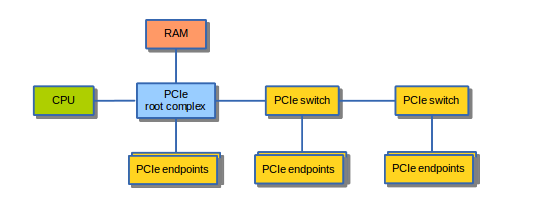
PCIe DMA
Star topology, Point-to-Point/Serial.
Arbitration by the “root complex”
PCIe supports full duplex DMA transfers of multiple devices at the same time.